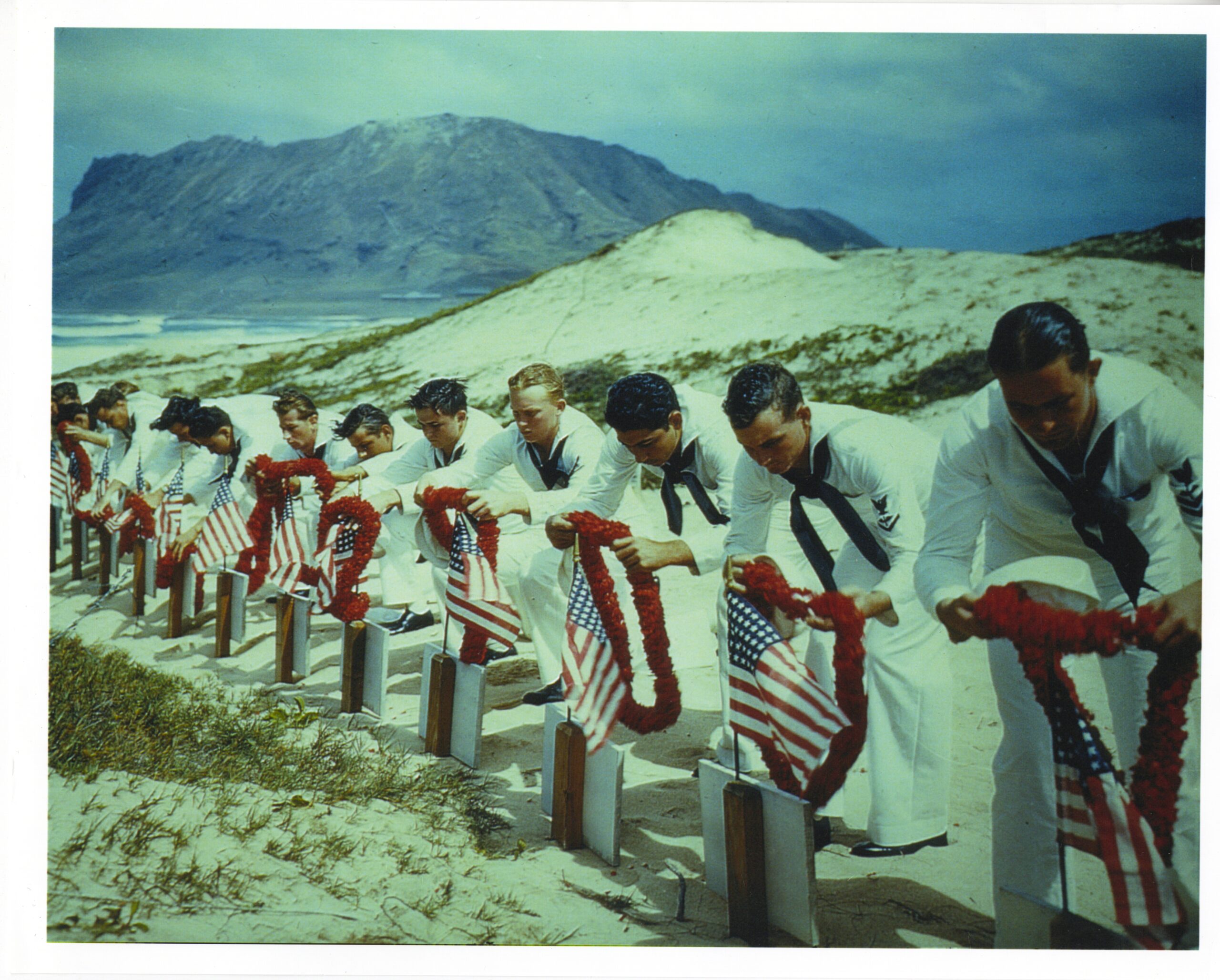
One day after the Japanese attack on Pearl Harbor on December 7, 1941, the United States entered what would become the deadliest conflict in human history. What began as a regional war in Europe and Asia grew into a global struggle fought across continents, oceans, and skies. American forces would ultimately fight in North Africa, Italy, France, Belgium, the Netherlands, Germany, the Philippines, the Pacific islands, China, and countless seas in between. The war ended on August 15, 1945, when Japan surrendered shortly after the United States dropped atomic bombs on Hiroshima and Nagasaki, bringing an end to nearly four years of American combat operations.
The human cost of World War II was staggering. The global conflict claimed an estimated 70 to 85 million lives—soldiers and civilians from more than seventy nations. Entire cities were destroyed, families uprooted, and generations forever changed. The United States lost 407,316 servicemen, averaging more than two thousand deaths every week. Another 671,278 Americans were wounded, many carrying the physical and emotional scars for the rest of their lives.
In northeast McHenry County, 182 servicemembers with ties to the area made the ultimate sacrifice during the war. Their loss was felt in every corner of the county. From the farms of Hebron and Spring Grove to the factories and rail lines of Woodstock, Harvard, and McHenry, families received telegrams that forever altered their lives. Every community—whether town, city, village, or township—mourned its fallen sons. The heartbreak of war reached classrooms, church pews, factory floors, and kitchen tables. Streets that once echoed with the footsteps of young men heading to school, work, or church now carried the weight of grief and remembrance.
McHenry County’s contribution to the war effort extended far beyond the battlefield. Young men enlisted from every walk of life—farmhands, factory workers, students, tradesmen, and recent graduates. Many trained at Great Lakes Naval Training Station just to the east, while others joined the Army, Army Air Forces, Marine Corps, or Coast Guard. Some served in storied divisions that fought in Europe; others endured the brutal island campaigns of the Pacific. A number of local families sent multiple sons into uniform, each carrying the hopes of their community with them.
On the home front, McHenry County residents embraced the responsibilities of wartime life. Farmers increased production to support the nation’s food supply. Local factories shifted to wartime manufacturing, producing essential materials and equipment. Women entered the workforce in unprecedented numbers, filling roles left vacant by men in uniform. Schools held scrap drives, churches organized prayer services, and families gathered around radios for news from overseas. Blue Star Service Flags hung in windows across the county, each one representing a loved one serving far from home. For too many families, those blue stars turned to gold.
The departure of American soldiers for war left those at home with a solemn duty: to live lives worthy of the sacrifice being made abroad. An anonymous poem titled “Wartime Prayer” captured this sense of responsibility. First Lady Eleanor Roosevelt carried the poem with her throughout the war, and a copy was found in her wallet when she died. The poem commemorates the fallen and inspires the living to embrace lives of purpose, gratitude, and remembrance—values that continue to guide our efforts today.
“Wartime Prayer”
Dear Lord,
Lest I continue
My complacent way,
Help me to remember that somewhere,
Somehow out there,
A man died for me today.
As long as there be war,
I then must
Ask and answer,
Am I worth dying for?