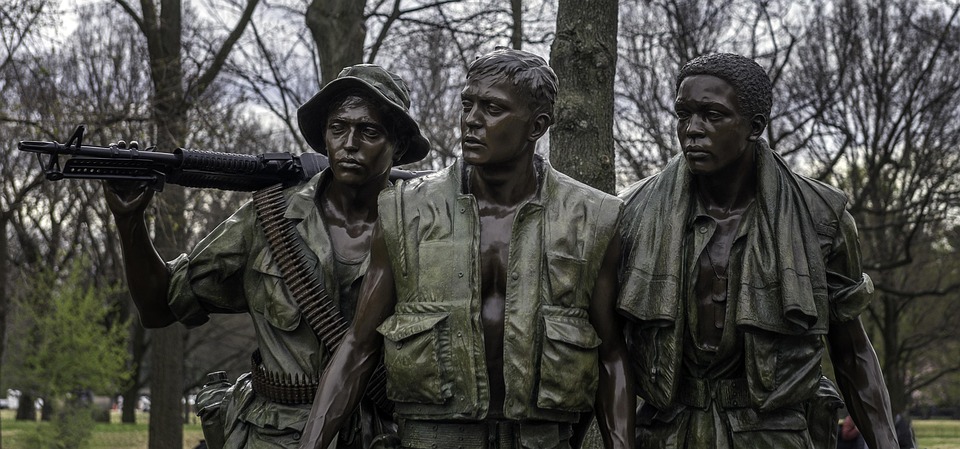
As the memories of Korea were still settling into history, another call to service arose. No longer were young Americans asked to contain the spread of communism on the Korean peninsula; they were now sent into the jungles and highlands of Vietnam. The frozen mountains of Korea were replaced by the dense, unforgiving terrain of Southeast Asia.
In the early months of 1965, President Lyndon Johnson deployed 3,500 United States Marines to South Vietnam, and later that same year another 100,000 troops were sent to fight. America and her young sons were now fully engaged in a long and costly war.
American soldiers in Vietnam faced a very different and challenging type of combat compared to the wars their fathers had fought. Instead of clear front lines and uniformed armies, U.S. troops confronted an enemy who blended into the civilian population and relied on guerrilla tactics—ambushes, sniper fire, sudden raids, and attacks that came without warning. Soldiers often could not tell who the enemy was.
Much of the fighting took place in dense jungles, rice paddies, and mountainous terrain that made movement difficult and visibility limited. Extreme heat, heavy rain, insects, disease, and mud wore soldiers down physically and mentally. Patrols were long and exhausting, and units often operated far from major bases and the support they offered.
The widespread use of booby traps, land mines, and hidden tunnel systems struck fear in the hearts of foot soldiers as they patrolled the jungle floor. These dangers were compounded by a silent and lasting threat: exposure to Agent Orange, a powerful herbicide used to clear vegetation. Its toxic effects would follow many veterans home, causing chronic illnesses and claiming lives long after the war had ended.
When these young men returned home, they stepped into a deeply divided nation. Unlike previous wars, there were no parades, no fanfare, and no public celebration of their service. Most returned alone or in small groups, departing the battlefield and arriving back in the United States within days—without time to decompress from the horrors they had endured.
Nearly a decade passed between the end of the war and the dedication of the Vietnam Veterans Memorial in Washington, D.C. Of the 58,318 names engraved on the memorial, thirty‑four were sons of McHenry County, Illinois.