Harvard, IL.
Date of Birth: 16 October, 1912
Date of Death: 11 June, 1944
Branch of Service: USAAF (United States Army Air Forces)
Rank: Staff Sergeant
Unit: 826th Bomb Squadron, 484th Bomb Group, Heavy, 15th Air Force
Aircraft Type and Position: B-24 Liberator- Ball Turret Gunner
Place of Death: Petrosani, Romania
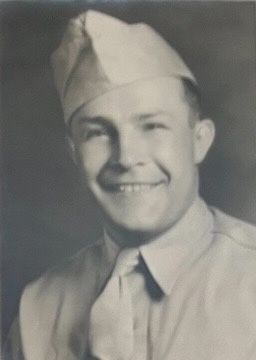
Staff Sergeant Raymond Kennedy
At 11:00am on December 5th, 1951, Lieutenant Colonel E.M. Brown of the Department of the Army Quartermaster Corp paid a visit to 205 North Eastman Street in the small rural town of Harvard, IL. This was the home of Mrs. Sarah J. Kennedy and her husband Louis G, parents of Staff Sergeant Raymond Kennedy. Lt. Col. Brown informed her that the remains of their son were part of a group of nine decedents and that, while currently in a New York Port, they would soon be transferred to their final interment place, Jefferson Barracks National Cemetery in St. Louis. With her husband away from home, Sarah had to bear the news alone. And while it was a shock, it was not a surprise: it had been nearly a decade since the Kennedy’s had learned Raymond was missing in action.
Before enlisting in the Army in June 1942, Raymond worked for the F.W. Lanning Bag Company in his hometown of Harvard. After entering the service, he endured several months of grueling training that prepared him to serve as the ball turret gunner aboard a B-24 Liberator. It was one of the most dangerous positions aboard the bomber. The gunner was separated from the rest of the crew. Exposed to temperatures as low as 70 degrees below zero and housed in a cramped spherical compartment underneath the bomber, the gunner’s main responsibility was to defend the bomber’s underside with two .50-caliber machine guns. The vulnerability of the ball turret gunner was highlighted by the lack of any armored protection and was one of the primary targets of the German fighters. In the event that the turret’s hydraulics were damaged, making an escape could be impossible.
Staff Sergeant Kennedy went on to fly twenty-eight combat missions with the 826th Bombardment Squadron, 484th Bombardment Group, putting him just two shy of the required thirty. Reaching that milestone would mean being sent home to train new crew members or reassigned to non-combat duty. Either way, climbing back in a B-24 to most likely face the treacherous enemy flak or German Luftwaffe fighters was not mandatory.
On the morning of June 11, 1945, at 0:912, along with the other eleven crew members, the B-24 bomber nicknamed Umbriago, piloted by 1st Lt. Lawrence Z. Rose, took off from the Torretto Airfield, Foggie Complex in Italy. Their mission was a high-altitude daylight bombardment of the oil installations in Giurgiu, Romania.
Less than two months later a letter was delivered to 205 North Eastman Street:
Mrs. Sarah J. Kennedy
205 North Eastman Street
Harvard, Illinois
Dear Mrs. Kennedy
I am writing you with reference to your son, Staff Sergeant Raymond E. Kennedy, who was reported by The Adjutant General as missing in action over Romania since June 11th.
Further information dated June 16th has just been received indicating that Sergeant Kennedy was a crew member of a B-24 (Liberator) bomber which departed from southern Italy on a mission to Giurgiu, Romania on June 11th. Full details are not available, but the report indicates that during this mission our planes encountered enemy aircraft and in the ensuing battle your son’s bomber sustained damage. Two parachutes were observed as the plane left the formation. The report further states that this occurred about 9:15 a.m. in the vicinity of Pietrosani, Romania. The crew members of other planes returning from this mission were unable to give further information with reference to the disappearance of this aircraft.
Due to the necessity for military security, it is regretted that the names of those who were in the plane and the names and addresses of their next of kin may not be furnished at the present time.
Please be assured that a continuing search by land, sea, and air is being made to discover the whereabouts of our missing personnel. As our armies advance over enemy occupied territory, special troops are assigned to this task, and all agencies of the government in every country are constantly sending in details which aid us in bringing additional information to you.
Very Sincerely.
Major E.A. Bradunas
Major A.G.D.
Chief, Notification Branch
Personal Affairs Division
Assistant Chief Air Staff, Personnel
Despite this news, the Kennedys kept their hope alive for five more years, until in September of 1949, a second letter was delivered that dashed all remaining optimism.
30 September 1949
Mr. and Mrs. Louis G. Kennedy
205 North Eastman Street, Harvard, Illinois
Dear Mr. and Mrs. Kennedy:
I am writing you relative to the previous letter from this office in which you were regretfully informed that a Finding of Death had been made in the case of your son, Staff Sergeant Raymond E. Kennedy, 36,353,036, Air Corps, and that the presumptive date of his death had been established as 12 June 1945.
The aircraft of which your son was a crew member participated in a bombing mission to Giurgiu, Romania on 11 June 1944. The aircraft was attacked by an enemy fighter plane and about 500 feet below the formation, two or three engines stopped. The aircraft then went into a spiral to the right and disappeared from view. Two returned crew members stated that six parachutes were seen to emerge from the stricken plane. Six of the crew members have been accounted for. Three were reported killed in action, one died of wounds, and two who were returned to military control, were later evacuated to the United States. Second Lieutenant Louis Falvo, the navigator, stated that he and Staff Sergeant William L. Humphrey, landed in a swamp with water over their heads, and that he managed to reach shallow water, but Sergeant Humphrey drowned. Since the action occurred near the Danube River, it is possible that your son may have drowned, however, this possibility seems remote since only six parachutes were observed. From that fact that the airplane exploded before it crashed, it is only logical to conclude that your son did not have a chance to parachute and was killed either in the explosion or when the plane crashed to the ground. In view of the above, the records of the Department of the Army are being amended to show that Sergeant Kennedy was killed in action on 11 June 1944 in Pictrosani, thirty miles west of Giurgiu, Romania.
Pursuant to the provisions of Public Law 490, 77th Congress, 7 March 1942, as amended, official reports will now be issued by the Department of the Army which will indicate the actual date of his death as that shown above. The issuance of this official Report of Death will not effect any payment or settlement of accounts which has been made on the basis of the Finding of Death.
My continued sympathy is with you in the great loss you have sustained.
Sincerely yours,
Edward F. Witsell
Major General
The Adjutant General of the Army
In total, the United States Army Air Forces sustained 52,173 aircrew combat deaths during World War II. The name of Staff Sergeant Kennedy, the first-born child of Louis and Sarah, was officially added to the 826th Bomb Squadron roll of honor, making him one of Harvard’s twenty-seven Gold Stars.
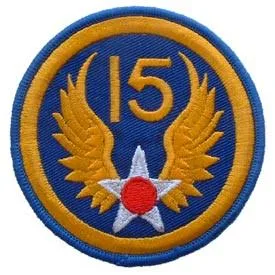
15th Air Force

826th Bomb Squadron
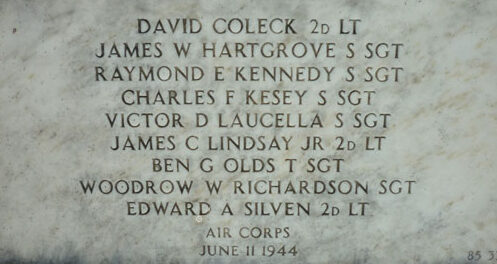
Jefferson Barracks National Cemetery
Lemay Township, St. Louis County, MO. Section 85, Site 32-34
To visit the cemetery, click on his Memorial