Crystal Lake, IL.
Date of Birth: 4 January, 1924
Date of Death: 30 July, 1944
Branch of Service: USAAF (United States Army Air Forces)
Rank: Staff Sergeant
Unit: 829th Bomb Squadron, 485th Bomb Group, Heavy, 15th Air Force
Aircraft Type and Position: B-24 Liberator- Gunner
Place of Death: Vicinity towns of Szigetszentmiklos and Tokol, Pest County, Hungary
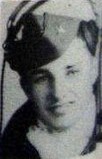
Staff Sergeant Stanley M. Pakulla
From Sicily to Poland, from Budapest to Munich, the 485th Bomb Group struck at Nazi-controlled oil refineries, railroad junctions, bridges, airfields, and command centers across the European front. Within the group, the 829th Bombardment Squadron included a young airman named Stanley Pakulla. As a gunner, he was tasked with defending against enemy aircraft and protecting his crewmates and squadron with his .50-caliber machine gun as they destroyed critical targets across Axis-controlled Europe.
Stanley Michael Pakulla was born on January 4, 1924, at St. Joseph Hospital in Elgin, Illinois. He grew up in Crystal Lake and registered for the draft shortly after his eighteenth birthday. Standing five feet nine inches and weighing 170 pounds, he entered the Army Air Corps and served for two years before his death.
At 11:00 a.m. on July 30, 1944, in the clear skies over Budapest, Hungary, Staff Sergeant Pakulla was killed when his B-24 Liberator heavy bomber was struck by flak from defensive anti-aircraft guns. He was just twenty years old. The bomber, piloted by 1st Lieutenant Frank Wodzinski with bombardier 1st Lieutenant Keith Foster, had been tasked with striking the Duna Aircraft Factory. Fellow pilots from the 829th Squadron, 1st Lieutenants Malkoski and Skelton, watched the plane crash. As the official report states, “no search was made, aircraft lost over target.” Of the twelve crew members aboard, only one survived. Two other bombers were shot down that day over Budapest: another B-24 flown by 1st Lieutenant Jasper Johnson and a B-17 Fortress piloted by 1st Lieutenant William Nivens.
The bombing campaign against Budapest’s industrial infrastructure was critical in the months before the Siege of Budapest, which ended with an unconditional surrender to Soviet and Romanian forces on February 13, 1945.
The investigatory work necessary to identify casualties from plane crashes took precision, time, and dedication. On that final flight, and presumably many before it, Stanley wore a personalized U.S. Army towel around his neck. This would prove critical in identifying his remains.
His remains were first buried in the American military cemetery in Budapest in 1946, then moved to St. Avold, France. In the summer of 1950, the Army memorial division informed his brother Vincent that Stanley had been permanently interred at Ardennes American Cemetery in Belgium. A gravestone there marks his sacrifice, maintained in perpetuity by the United States government.
By Austin May
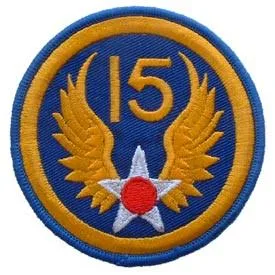
15th Air Force
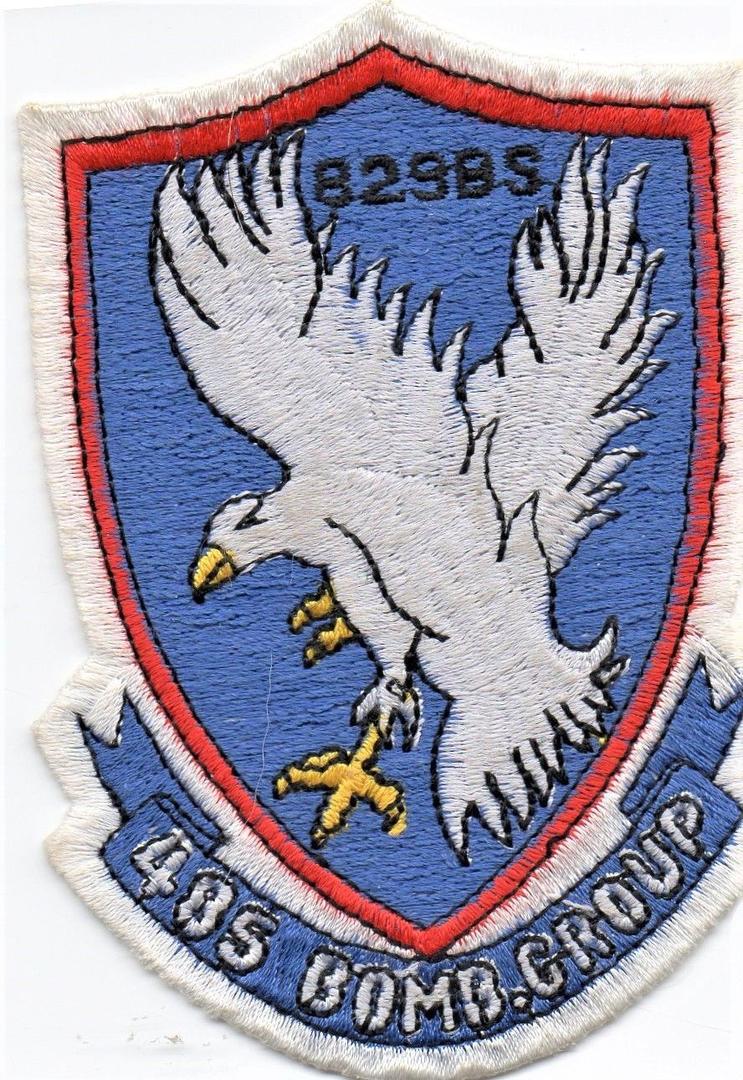
485th Bomb Group
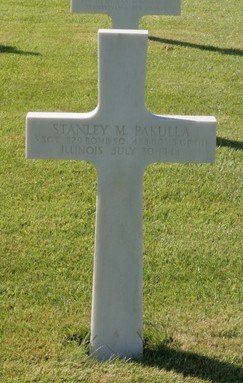
Ardennes American Cemetery and Memorial
Neuville-en-Condroz, Arrondissement, de Liege, Liege, Belgium
To visit the cemetery, click on his Headstone