Union, IL.
Date of Birth: 6 September, 1920
Date of Death: 23 November, 1943
Branch of Service: USAAF (United States Army Air Forces)
Rank: Second Lieutenant
Unit: 75th Bomb Squadron, 42nd Bomb Group, Medium, 13th Air Force
Aircraft Type and Position: B-25 Mitchell- Bombardier
Place of Death: Matchin Bay, Bougainville Island, Solomon Islands, Pacific Ocean
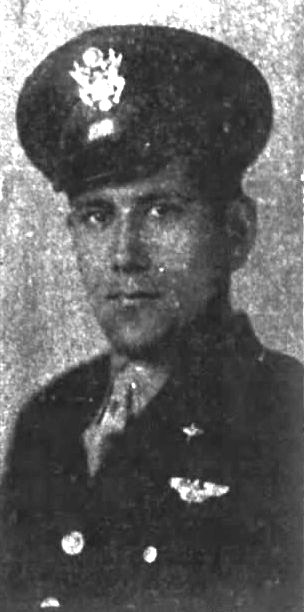
Second Lieutenant William H. Levernier
The morning of November 23, 1943, began like many others at Renard Field on Guadalcanal. Second Lieutenant William H. Levernier, a twenty-three-year-old bombardier from Union, Illinois, prepared for what would be his final mission. As a member of the 75th Bombardment Squadron, 42nd Bombardment Group, Levernier had already proven himself in combat. On this day, he and five other crew members would board B-25C Mitchell bomber serial number 42-32255 for a strike against a newly constructed Japanese airfield at Chabai on the island of Bougainville.
Born September 6, 1920, in New Trier Township, Illinois, William Hugo Levernier grew up working on his father’s farm in Union, McHenry County. After completing four years of high school, he continued as a farm hand, helping his father William Levernier Sr. manage their operation. When he registered for the draft in February 1942, he stood 5’10” and weighed 150 pounds, with dark complexion, black hair, and dark eyes. Just two months later, on April 4, 1942, Levernier enlisted in the Army Air Corps at Camp Grant, Illinois. He would rise from the rank of Private to Second Lieutenant, receiving his commission and assignment to the Pacific theater.
The mission on November 23 called for twelve B-25s from the 75th Bomb Squadron, led by Captain Davidson, along with four aircraft from the 70th Bomb Squadron under Lieutenant Blackburn. Their target was the Chabai Airfield, a new Japanese strip under frantic construction near Matchin Bay on Bougainville’s western coast. The Japanese were working to expand their air operations in the region, and Allied command wanted the facility destroyed before it became operational.
As the formation approached Chabai at 9:15 a.m., intense anti-aircraft fire erupted from Japanese positions below. The B-25s pressed their attack, dropping parafrag bombs and strafing the airfield with their forward-firing guns. Three bombers sustained damage in the fierce exchange. Levernier’s aircraft took the worst of it. With critical systems failing and the plane severely damaged, the pilot fought to maintain control as they turned back toward base. They didn’t make it far. The crippled B-25 went down in the waters of Matchin Bay, taking all six crew members with it.
Lost alongside Second Lieutenant Levernier were Flight Officer Richard Schaffner of Pennsylvania, the pilot; Second Lieutenant John A. Bailey of New Jersey, co-pilot; Staff Sergeant Peter Caravella of Louisiana; Staff Sergeant Patrick G. Quinn of Oregon; and Sergeant William Garrity of California. None of the men survived. Search efforts in the days that followed found no trace of the aircraft or its crew.
For more than a year, the six men were listed as Missing in Action. Finally, on November 24, 1944 exactly one year and one day after the crash the War Department officially declared them dead. William Levernier’s name was inscribed on the Tablets of the Missing at Manila American Cemetery in the Philippines, where it remains today alongside thousands of other service members who have no known grave. Levernier was awarded both the Air Medal and the Purple Heart.
The son of a McHenry County farmer had given his life over the Solomon Sea, his aircraft lost beneath the waves off a distant Pacific island. Yet William H. Levernier’s sacrifice would not be forgotten by his community. His body was eventually recovered and returned home to Illinois, where he was laid to rest at Sacred Heart Cemetery in Marengo, McHenry County—back in the farmland where his story began.
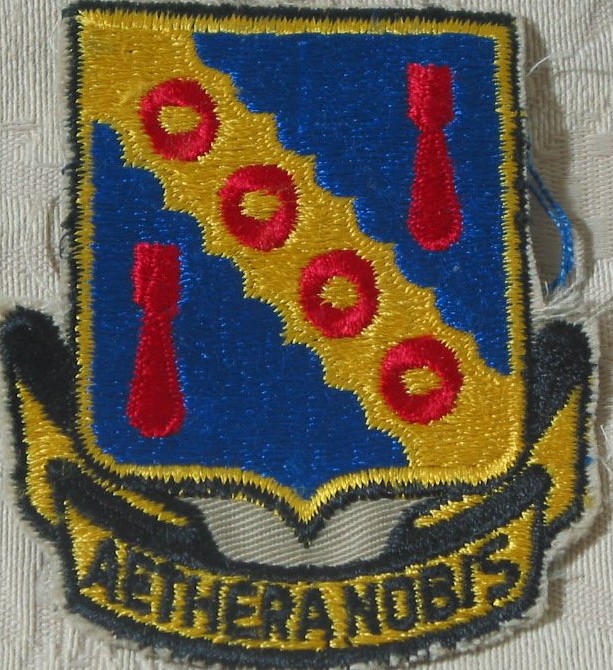
42nd Bomb Group
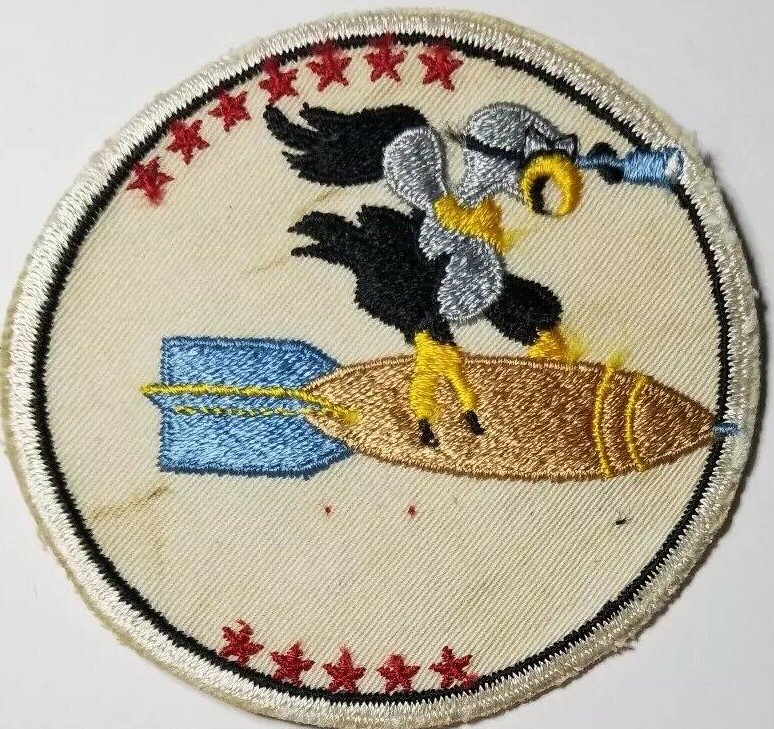
75th Bomb Squadron
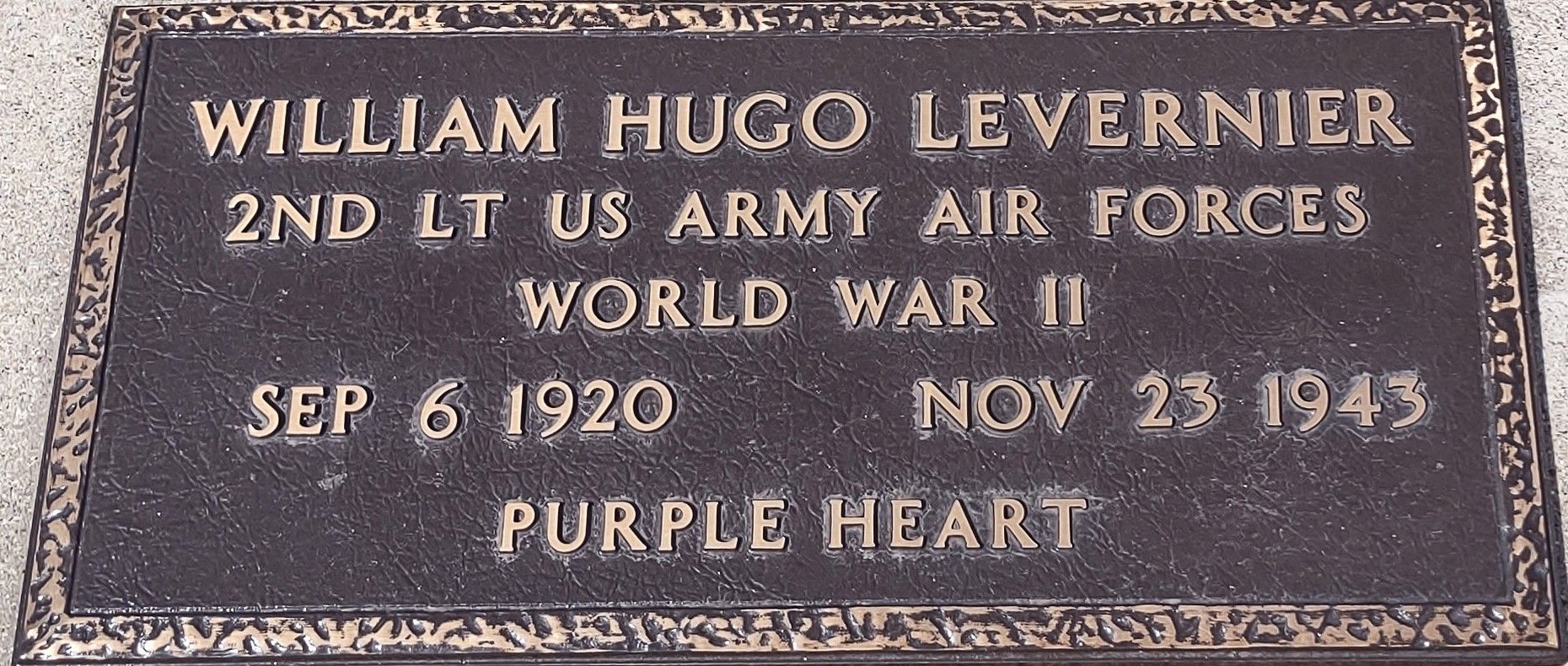
Sacred Heart Cemetery
Marengo, McHenry County, IL.
also
Manila American Cemetery and Memorial
Also known as Fort William McKinley Cemetery
Manila, Capital District, Philippines
To visit the cemetery, click on his Headstone